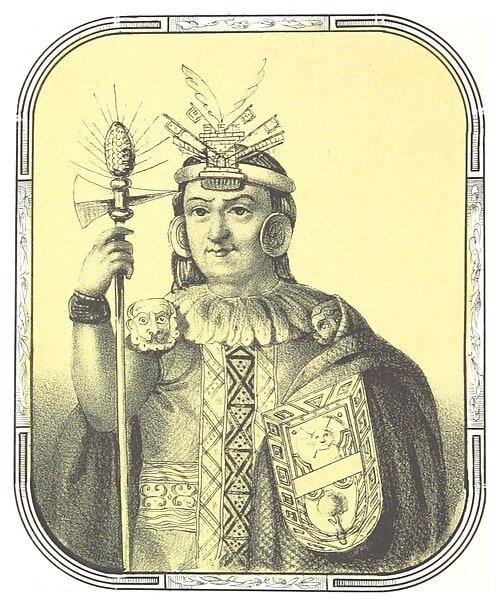
Manco Inca did not break out of a locked cell on April 18, 1536. By then he had already been imprisoned, released, watched, humiliated and twice intercepted while trying to get away from Cuzco. His final escape worked because he persuaded the Spaniards to let him leave.
That distinction is central to the case.
Manco had entered Cuzco in 1533 as an Inca ruler allied with Francisco Pizarro’s forces against surviving supporters of Atahualpa. Over the next two years, that alliance hardened into coercive dependence. Spanish leaders demanded treasure, interfered with his household, restricted his movement and at points held him in chains. Pedro Cieza de León, writing close to the conquest and using testimony from a servant of Manco, describes two earlier attempts to leave the city that ended in pursuit, capture and finally imprisonment in irons.
The successful departure came in April 1536. A near-contemporary Spanish tradition says Manco obtained Hernando Pizarro’s permission for a ritual journey into the Yucay valley by promising to return with a life-size golden image of his father, Huayna Capac. Manco’s son Titu Cusi Yupanqui, dictating an Inca dynastic account in 1570, gives a different version: after receiving warning that another arrest was imminent, Manco claimed that he was going to Callca to hunt.
The two traditions disagree about the pretext. They agree on the larger fact: the Spaniards allowed him to leave Cuzco expecting him to return.
He did not. From Calca, Manco coordinated the mobilization that soon surrounded Cuzco and challenged Spanish rule across central Peru. His escape from constrained Spanish control became the transition between a compromised alliance and the largest organized Inca resistance of the conquest era.
At a Glance
- Best-supported departure date: April 18, 1536.
- Escape type: Authorized departure used to break permanently from Spanish surveillance and political control, not a conventional jailbreak.
- Earlier failed departures: Cieza de León describes two attempts that were intercepted.
- Immediate destination: Calca, in the Yucay/Urubamba valley, is strongly supported as the center from which Manco gathered forces.
- Spanish-side pretext: A ritual or festival journey connected to Huayna Capac, with a promised life-size golden image.
- Inca-side pretext: Titu Cusi says Manco claimed he was going to Callca to hunt.
- Why he left: Repeated coercion, treasure demands, interference with his household, imprisonment and the need to organize resistance outside Spanish-controlled Cuzco.
- Immediate result: Manco stayed away, ignored demands to return and coordinated a general uprising.
- Historical consequence: His departure directly preceded the 1536 siege of Cuzco and the creation of a durable Inca resistance centered eventually in Vilcabamba.
An Inca ruler in a Spanish-controlled capital
Manco’s political position after the Spanish entry into Cuzco was never as simple as “puppet king.” Francisco Pizarro supported his accession, and Spanish power was essential to the immediate political arrangement. Yet Cieza de León also recorded that many Indigenous elites regarded Manco as a legitimate son of Huayna Capac and a true ruler. He possessed dynastic standing and could mobilize relationships that the Spaniards did not create.
At first, cooperation served both sides. Manco had enemies among the factions formed during the civil war between Huáscar and Atahualpa. Spanish forces needed an Inca ruler who could help stabilize Cuzco, supply troops and give their occupation a usable political structure. The balance changed as Spanish demands widened.
Manco’s son Titu Cusi later described his father’s early cooperation as a catastrophic mistake. In his telling, Manco initially regarded the newcomers as allies, provided servants and treasure and ordered his subjects to assist them. The account then becomes a catalogue of betrayal: repeated demands for gold and silver, seizures of royal women, disrespect, threats and imprisonment.
Titu Cusi wrote with an obvious political purpose. His 1570 account defended the Vilcabamba Inca dynasty to a Spanish colonial audience and justified his father’s resistance. The speeches attributed to Manco cannot be treated as stenographic records. Even so, the broad pattern of coercion is not confined to his narrative; Spanish chroniclers also acknowledge that Manco was watched, pursued and imprisoned.
Two departures that failed
Pedro Cieza de León preserves the strongest detailed account of Manco’s earlier efforts to leave Cuzco. His chapter is valuable partly because he explains one of his sources: Cieza says that Alimache, a former servant of Manco whom he considered intelligent and possessed of a good memory, told him about the events.
According to Cieza, Manco and leading Inca figures agreed that he needed to get outside Cuzco and reach a secure place from which supporters could assemble. The plan was discovered. Juan Pizarro ordered trusted Indigenous watchers to monitor Manco without making the surveillance obvious.
Manco nevertheless left. Cieza says he departed with members of his household and traveled toward Mohína. Once Juan Pizarro learned that he was gone, Gonzalo Pizarro and other mounted Spaniards pursued him. The pursuit caught up with his entourage beyond Cuzco. Manco left his litter and concealed himself among reeds in marshy ground, but Spanish horsemen found him and returned him to the city.
Cieza’s account then gives a second attempt. Manco again left Cuzco, this time intending to move toward nearby high mountain country. Watchers immediately alerted Juan Pizarro. The Spaniards caught Manco before he had gone far. After the second interception, Cieza says Juan Pizarro had him put in irons and openly guarded by Spaniards.
These episodes transform the meaning of the final April departure. By 1536, the Spaniards had already learned that Manco might use movement outside Cuzco to organize resistance. Manco had also learned that simply slipping away under surveillance was unlikely to work.
Captivity, treasure and coercion
The chronology of Manco’s imprisonment is difficult because sixteenth-century sources organize the episodes differently. Cieza connects the irons directly to the second intercepted departure. Agustín de Zárate, writing in 1555, later describes Manco as imprisoned in Cuzco because of plans made with other Inca leaders against the Spaniards. Zárate says Juan Pizarro ordered him released before Hernando Pizarro returned, while Hernando afterward treated him more favorably but continued to have him watched.
Titu Cusi’s account presents repeated imprisonment as an instrument of extortion. In one episode, he says Spaniards arrested Manco, shackled his feet and demanded gold and silver as the price of release. His narrative also links the coercion to demands involving women of Manco’s royal household. Modern scholarship cautions that the chroniclers do not always agree about which Pizarro brother was responsible for particular abuses, so assigning every act to one man creates more certainty than the record permits.
The underlying pattern is clearer. Manco’s position combined the title and ritual authority of an Inca ruler with a steadily narrowing capacity to act independently. Spanish leaders wanted the resources and political cooperation his status could produce, while also trying to prevent him from using that same status to mobilize resistance.
The result was a ruler who could be ceremonially recognized and physically chained within the same political system.
Release did not mean freedom
Hernando Pizarro returned to Cuzco early in 1536. Later sources commonly present his arrival as a change in Manco’s treatment. Zárate says Hernando developed a friendlier relationship with the Inca and that Manco was no longer in prison, though he remained under guard. Other reconstructions emphasize that Hernando had reasons to undo some of the damage caused by earlier mistreatment and recover Manco’s cooperation.
That distinction is why “escape from Spanish control” is more accurate than “escape from prison” for the final April event. Manco was not in irons when he made the successful departure. He was still operating under a regime in which Spanish officials expected to approve his movements and could send armed men to bring him back.
The final solution was to make departure look temporary and acceptable.
April 18, 1536
A particularly useful modern reconstruction by historian David Emmanuel Franco Córdova draws on early participant and witness traditions surrounding the siege of Cuzco. It dates Manco’s departure to April 18, 1536, during Holy Week.
According to that reconstruction, Manco left Cuzco for Calca in the Yucay valley, where forces were gathering. The date comes from the anonymous Relación del Sitio del Cuzco, a Spanish account associated with the events of 1536–1539 and preserved through later editions. Because the text is anonymous and its exact authorship remains disputed, it should not be treated as a perfect diary. Its proximity to the events nevertheless gives the April 18 date substantial weight.
The departure did not initially announce rebellion. Manco had permission.
What he told the Spaniards is where the source traditions divide.
The golden statue
The Spanish-side version appears clearly in Zárate. He says Manco asked Hernando Pizarro for permission to go to the country of Yucay to celebrate a festival. Manco promised to return with a solid-gold image, made at life size, of his father Huayna Capac.
The 1539 relation, as analyzed by Franco Córdova, supports a closely related version. Manco requested permission for a ritual journey honoring Huayna Capac and promised the gold figure. The same reconstruction says Manco departed with Villac Umu, the high Inca religious authority, while leaving some nobles in Cuzco so as not to arouse suspicion.
The promise made sense in the political economy of Manco’s relationship with the Pizarros. Spanish demands for precious metal had already shaped their dealings with him. Offering a spectacular gold object gave Hernando a reason to permit movement that might otherwise have appeared dangerous. Zárate says the permission was granted, and Manco was now outside Cuzco without having to outrun mounted pursuers.
The hunting story
Titu Cusi gives another explanation. His account says an Indigenous interpreter named Antonico warned Manco that Juan Pizarro and others intended to arrest him the next day and possibly kill him unless he produced more gold and silver.
Manco responded by making a pretext of going to Callca to hunt. The Spaniards, according to Titu Cusi, did not object because they expected him back soon. After reaching Callca, Manco remained there for several days while men summoned from different regions gathered. Spanish messages urging him to return received increasingly unconvincing replies that the hunt was not yet finished.
Eventually the Spaniards recognized that Manco was not coming back voluntarily and sent men to force his return. By then the political threshold had been crossed.
Titu Cusi’s narrative has its own limitations. He was Manco’s son, but probably a small child in 1536. He dictated his account more than three decades later while leading the successor Inca state in Vilcabamba. His version preserves an indispensable Indigenous dynastic perspective, not an eyewitness transcript of every conversation.
Its disagreement with the Spanish tradition should remain visible rather than be treated as an error to eliminate.
Yucay, Callca and Calca
Place names can make the two versions appear more contradictory than they necessarily are. Zárate describes Manco receiving permission to go to “Yucaya.” The 1539-derived reconstruction places his destination at Calca in the valley of Yucay. Titu Cusi repeatedly calls the place Callca.
These traditions point toward the same broader valley north of Cuzco rather than proving two completely separate destinations. The modern Cusco office of Peru’s Ministry of Culture likewise identifies Calca as an important base for Manko Inka in 1536, describing it as a place where he established himself with forces capable of confronting the Spaniards.
The case therefore uses Calca, in the Yucay/Urubamba valley, as the best geographic description while avoiding an invented turn-by-turn route from Cuzco.
The moment escape became rebellion
A temporary absence turned into open resistance when Manco refused to return. Titu Cusi says that from Callca his father sent instructions to Quiso Yupanqui so that action around Lima could be coordinated with the attack on Cuzco. Captains were dispatched to mobilize men from the different quarters of the Inca realm.
Spanish messages continued to ask for Manco’s return. Titu Cusi says he answered that he was still hunting. Spanish forces eventually moved toward him. At a bridge near Callca, they encountered armed resistance and withdrew toward Cuzco.
The sequence matters because the escape did more than give Manco personal freedom. It moved the center of his authority outside the Spanish-controlled capital and allowed plans that had been dangerous inside Cuzco to become executable.
By early May, Cuzco was under siege.
The siege should not swallow the escape
The 1536 siege of Cuzco became one of the largest battles of the conquest of Peru, and chroniclers gave enormous — often implausible — numbers for Manco’s forces. Those army totals do not belong in the core metrics of this case.
The evidence is much stronger for the escape’s political sequence than for the exact size of the army that later gathered. Manco’s departure, mobilization in the Yucay valley and refusal to submit to Spanish recall are secure. Whether the siege began on May 3, May 5 or May 6 varies by chronology, and sixteenth-century claims about hundreds of thousands of warriors should not be converted into modern precision.
For the escape story, “early May” is enough. What followed demonstrated the importance of Manco’s physical separation from Cuzco: he could issue orders, receive forces, coordinate with commanders in other regions and challenge the Spanish occupation as an independent center of authority.
That was precisely what his earlier watchers had been trying to prevent.
From Calca to a rival Inca state
The siege did not drive the Spaniards out of Cuzco. After months of fighting and changing strategic conditions, Manco’s forces withdrew from the immediate capital. Resistance continued through Ollantaytambo and ultimately shifted toward the more defensible region of Vilcabamba.
There, Manco established the political center from which an independent Inca dynasty continued to resist Spanish power. The Vilcabamba state survived Manco. His sons, including Titu Cusi, inherited both its political claims and its memory of the conquest.
That later dynastic perspective is one reason the 1536 escape became more than a personal episode. Titu Cusi’s account presents his father’s departure as the consequence of a broken relationship: Manco had cooperated with the Spaniards, suffered repeated abuses and finally chose organized resistance. Spanish chronicles often framed the same movement as rebellion by a ruler whom the conquerors had supported.
Both descriptions contain political arguments. The escape sits at the point where those arguments diverge.
What can be stated securely
Several elements withstand the competing chronicles. Manco’s relationship with the Spaniards had deteriorated sharply by 1535–1536. He had been monitored and imprisoned. Cieza describes two earlier efforts to leave Cuzco that were stopped.
He was later released but remained under Spanish supervision. On April 18, 1536, according to the strongest near-contemporary chronology, he left Cuzco with permission and moved toward Calca in the Yucay valley. He did not return. From outside the city, he coordinated a large anti-Spanish mobilization that became open warfare.
The exact pretext remains disputed. One early tradition says ritual observance and a promised golden Huayna Capac statue. Another says hunting.
Those accounts do not undermine the escape. They reveal how it worked: Manco succeeded where his previous attempts had failed because the Spaniards did not initially understand that this departure was permanent.
Why the escape matters
The physical act was deceptively ordinary. No wall had to be climbed on April 18. No tunnel had to be dug. No guard had to be overpowered. The decisive barrier was permission.
Manco had discovered through earlier failures that Spanish surveillance could stop an unauthorized departure. He then left under conditions the Spaniards themselves accepted. Once beyond their immediate reach, his political position changed almost instantly. A ruler whose movements had been watched in Cuzco became the organizing center of a general uprising.
That is why the case belongs among major historical escapes. Freedom was not merely the outcome of the story; it was the condition that made the next history possible.
Evidence discipline
What the record supports
Status labels distinguish secure conclusions from uncertainty and rejected claims. Color is never the only signal.
WELL-SUPPORTED
Manco Inca successfully left Cuzco on April 18, 1536.
The exact date is preserved through the near-contemporary anonymous 1539 relation and a modern source-critical reconstruction; the wider April 1536 chronology is consistent across multiple traditions.
Sources: SRC-004, SRC-005, SRC-008MYTH
Manco escaped directly from a locked prison cell in April 1536.
He had previously been imprisoned, but Zárate and the broader chronology indicate he was released before the final departure and remained under surveillance rather than in irons at that moment.
Sources: SRC-002, SRC-003DOCUMENTED
Cieza records two earlier failed attempts by Manco to leave Cuzco.
Cieza’s Chapter XC explicitly states that Manco was caught twice and describes each pursuit separately.
Sources: SRC-002DISPUTED
The final escape used a religious journey and a promised golden statue of Huayna Capac as its pretext.
Zárate and the 1539 Spanish-source tradition support this account, while Titu Cusi instead says Manco claimed he was going to Callca to hunt.
Sources: SRC-001, SRC-003, SRC-005DISPUTED
Manco used a hunting trip to Callca as the final pretext.
Titu Cusi gives this version in 1570, but earlier Spanish traditions preserve a ritual/golden-statue explanation.
Sources: SRC-001, SRC-003, SRC-005WELL-SUPPORTED
Manco’s immediate resistance base after leaving Cuzco was Calca in the Yucay valley.
Titu Cusi places Manco at Callca, the 1539-derived reconstruction uses Calca in the Yucay valley, and Peru’s Ministry of Culture identifies Calca as a 1536 Manko Inka stronghold.
Sources: SRC-001, SRC-005, SRC-007MYTH
Manco was only a Spanish-created puppet with no independent Inca legitimacy.
Spanish support was crucial to his accession, but Cieza records Indigenous recognition of him as a legitimate son of Huayna Capac and ruler; his later ability to mobilize resistance also depended on Inca political legitimacy.
Sources: SRC-002, SRC-006MYTH
Titu Cusi was an adult eyewitness to the April 1536 escape.
Modern scholarship places Titu Cusi’s birth around the early 1530s, making him a small child at most in 1536. His account is an essential dynastic tradition, not an adult eyewitness transcript.
Sources: SRC-001, SRC-005Evidence diagram
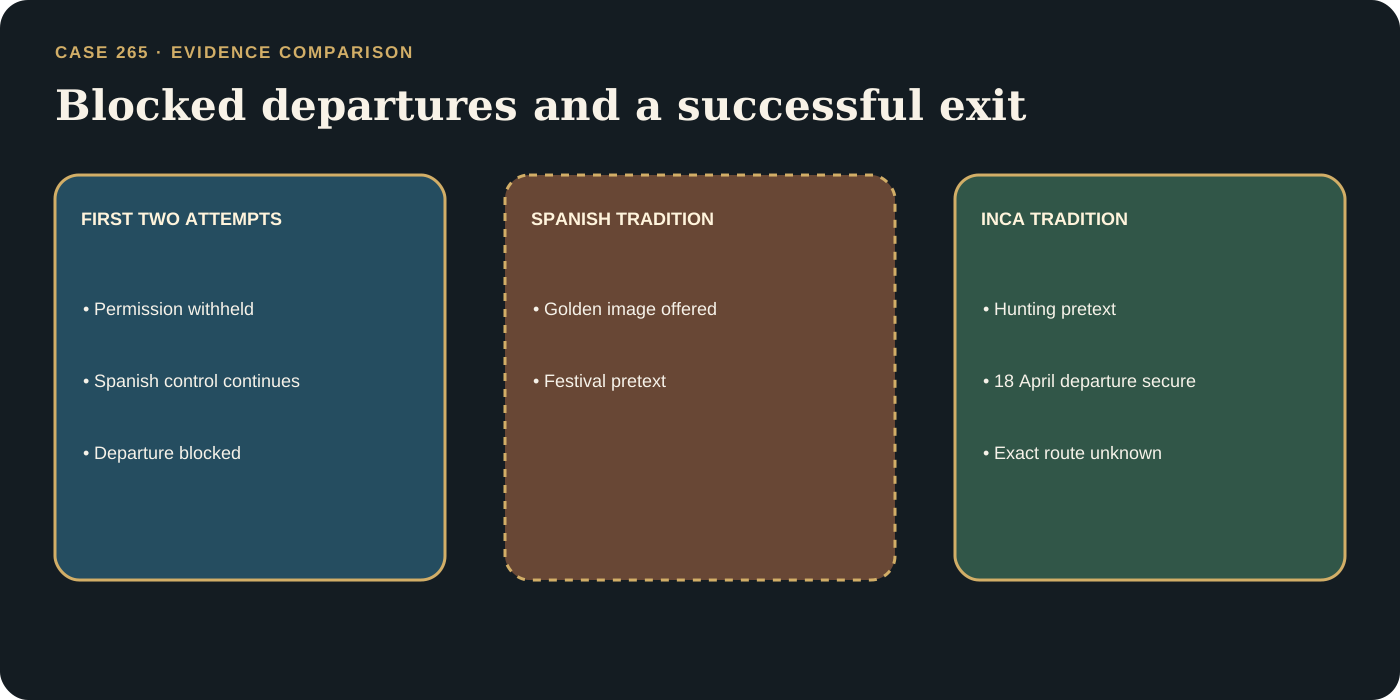
Two blocked departures and one successful exit
The final departure is secure; Spanish and Inca traditions preserve different explanations for the permission that made it possible.
The final departure is secure; Spanish and Inca traditions preserve different explanations for the permission that made it possible.