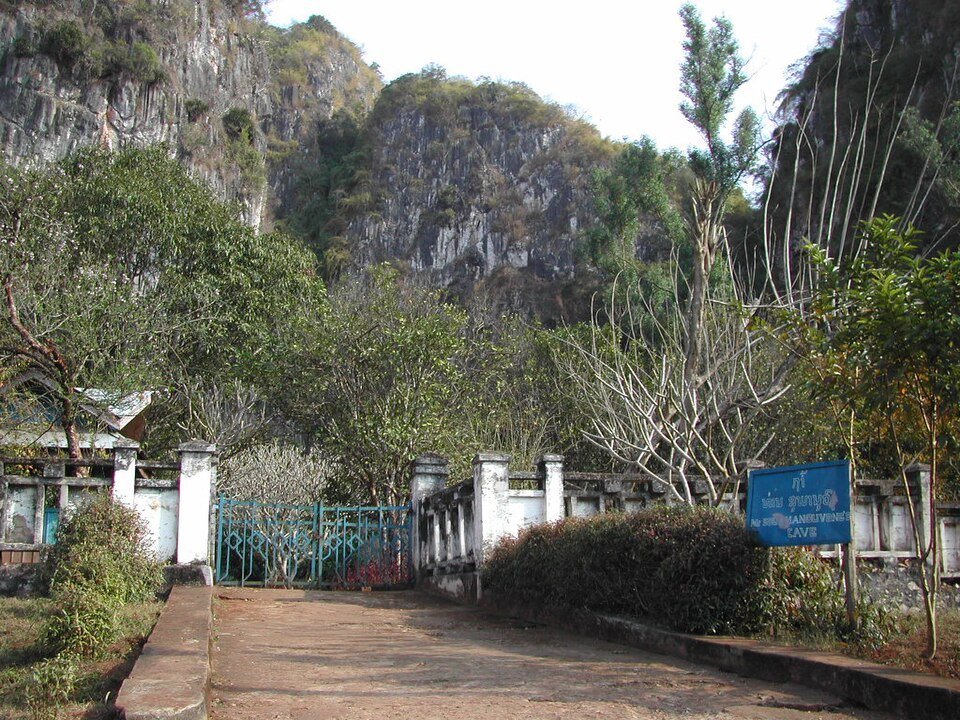
Prince Souphanouvong’s escape from Phonkheng prison in May 1960 was not a solitary jailbreak. It was the release of an entire political leadership group from the custody of a government that had spent almost ten months holding them for an indefinitely delayed treason trial.
The basic event is secure. During the night of 23–24 May 1960, Souphanouvong and other leaders of the Neo Lao Haksat—the Lao Patriotic Front—left the Phonkheng police camp outside Vientiane. Guards assigned to the prison helped them. The escape occurred during a tropical rainstorm, and the fugitives disappeared into the countryside before the Royal Lao Government could recover them.
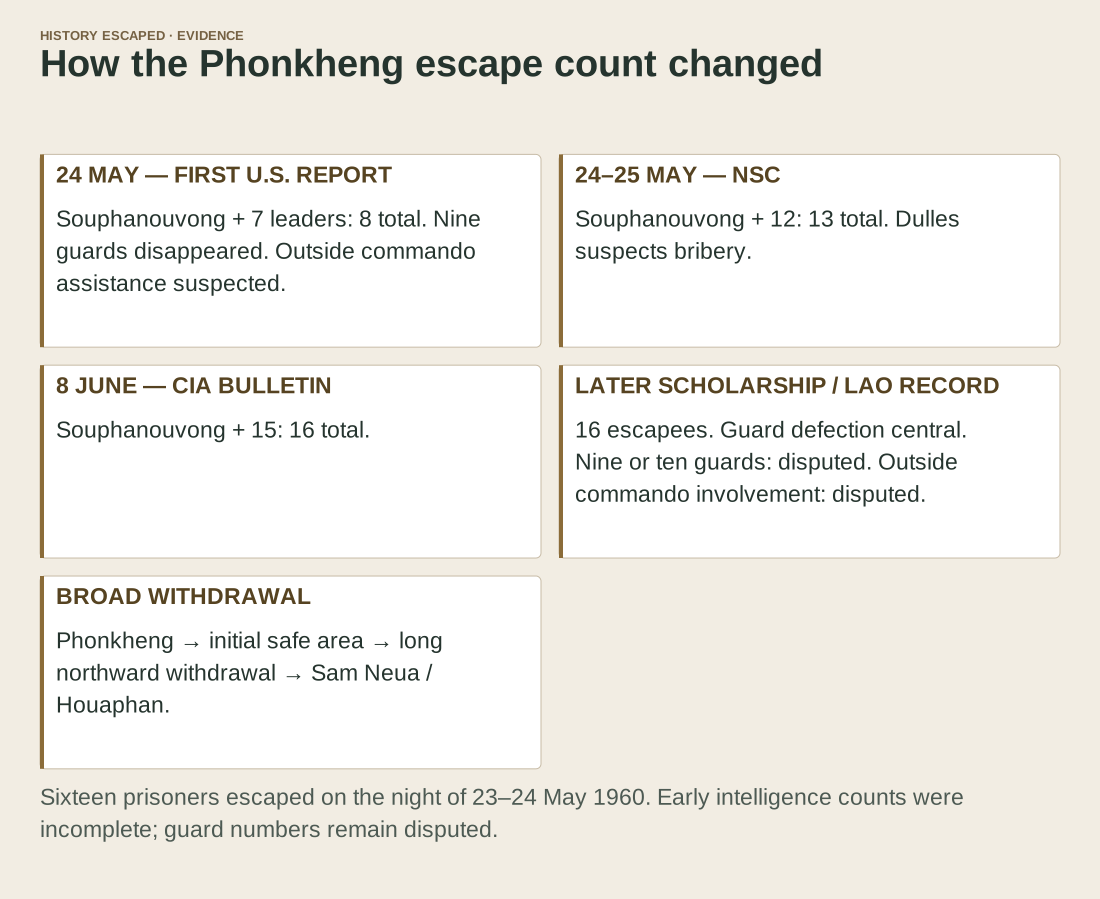
What remains disputed is the exact size of the group and the choreography of the break. Immediate American reporting on 24 May said Souphanouvong and seven other leaders escaped with the apparent cooperation of nine guards. Allen Dulles told the National Security Council that day that Souphanouvong and twelve other leaders had escaped, probably through bribery. A CIA bulletin two weeks later referred to Souphanouvong and fifteen other Neo Lao Haksat leaders—sixteen prisoners in all. Lao state commemoration and later scholarship also standardized the number at sixteen.
The most defensible conclusion is therefore that sixteen political prisoners escaped, while early intelligence reports were incomplete and sometimes contradictory. The guards present another count problem: nine are reported as having disappeared with the prisoners in immediate U.S. reporting, while later Lao testimony says ten guards helped the sixteen escape. Those discrepancies do not weaken the historical significance of the event. They show how quickly a dramatic prison break became both an intelligence problem and a national political legend.
At a Glance
- Prison: Phonkheng, also rendered Phone Kheng, Phonkeng, or Phongkheng
- Location: outskirts of Vientiane, Kingdom of Laos
- Escape: night of 23–24 May 1960; early morning 24 May
- Principal escapee: Prince Souphanouvong
- Political organization: Neo Lao Haksat / Lao Patriotic Front, associated with the Pathet Lao movement
- Best-supported mature prisoner count: 16 leaders
- Immediate U.S. count: Souphanouvong plus 7 in one report; plus 12 in an NSC briefing
- Later CIA count: Souphanouvong plus 15
- Guard participation: 9 guards disappeared with the group in immediate reporting; later Lao testimony says 10 guards helped
- Conditions: heavy tropical rainstorm
- Method: guard complicity, military-style clothing or uniforms, and rapid departure; some early reports also suspected an outside commando element
- Longer withdrawal: into Pathet Lao-controlled or sympathetic areas, followed by a long journey toward Sam Neua in the north
- Political consequence: restored senior Pathet Lao leadership to the field during a rapidly worsening Lao political crisis
Why the Leaders Were in Prison
The prison break grew out of the failure of Laos’s first coalition experiment. After the 1954 Geneva settlement, the Royal Lao Government and the Pathet Lao spent years negotiating political and military integration. Souphanouvong became the public face of the left-wing Neo Lao Haksat. In the 1958 elections, leftist candidates performed strongly, alarming conservative Lao politicians and American policymakers who feared communist expansion.
The coalition soon collapsed. In May 1959, the attempted integration of two Pathet Lao battalions into the Royal Lao Army broke down. One force refused the terms and moved toward the northeast. Open fighting resumed. The Royal Lao Government then moved against the political leadership in Vientiane.
Later Lao accounts date the arrest of the sixteen leaders to 28 July 1959. Modern scholarship likewise places Souphanouvong, Nouhak Phoumsavanh, Phoumy Vongvichit, Phoun Sipaseut, Sithon Kommadam, Singkapo Sikhotchounlamany, and other Lao Patriotic Front figures among those detained. They were accused of treason.
The case did not move quickly toward judgment. U.S. diplomatic reporting in May 1960 described the prisoners as still awaiting long-delayed trials. The delay mattered because the detention became part of a wider political struggle over whether the left would remain within parliamentary politics or return fully to armed opposition.
The men were not held in a large colonial stone prison. Nicholas Zeller, drawing on Oliver Tappe and other Laos scholarship, describes Phonkheng as recently repurposed horse stables in a village outside Vientiane, surrounded by barbed wire and illuminated by spotlights. That arrangement could still be closely guarded. It was simply less monumental than the word “prison” suggests.
Sixteen, Fifteen, Thirteen, or Eight?
The prisoner count is the first major source conflict. Lao official history names sixteen leaders and preserves a full commemorative roster. Oliver Tappe’s research on the escape and its later political memory also uses sixteen. Zeller’s recent dissertation follows that count.
Hugh Toye’s early history, however, noted a fifteen-prisoner tradition in part of the contemporary literature. The more striking discrepancies appear in American reporting on the actual night of the escape.
The U.S. State Department’s published Foreign Relations of the United States volume summarizes reports sent from Vientiane on 24 May. Those first reports said Souphanouvong and seven other Neo Lao Hat Xat leaders had escaped. At a National Security Council discussion, Allen Dulles reportedly used another figure: Souphanouvong and twelve other leaders.
By 8 June, a CIA Central Intelligence Bulletin referred to Souphanouvong and fifteen other Neo Lao Hak Sat leaders who had escaped on 24 May. The intelligence picture was plainly evolving. There is no need to force the earliest partial count to overrule the later converging record. Sixteen is now the strongest supported total because it appears in later U.S. intelligence, specialist scholarship, official Lao memory, and the named commemorative list.
The early undercounts remain historically important because they demonstrate that Washington did not know exactly what had happened in the first hours.
Winning Over the Guards
The central mechanism was not tunneling, lock-picking, or armed assault from within. It was political conversion.
Later Lao accounts say the prisoners spent months talking to the soldiers assigned to guard them. At a 2010 fiftieth-anniversary seminar, former guard Xiengsom Kounlavong was identified as one of the men who assisted the escape. He described a prison guarded around the clock and illuminated at night, but also an environment in which repeated contact between prisoners and guards allowed relationships to develop.
Souphanouvong himself later told journalist Wilfred Burchett that he had argued with the guards about the political legitimacy of their superiors and the role of foreign influence in Laos. According to that retrospective account, the effort initially produced little result but gradually won support.
Seth Jacobs’s history of U.S. policy in Laos accepts the basic conversion story. He writes that by late May enough guards had been won over to ensure that a night shift was made up of sympathetic men. Those guards supplied the prisoners with military uniforms and weapons. This is more persuasive than the immediate American assumption of simple bribery because it is supported by later testimony and fits the disappearance of guards with the escapees.
It should not be romanticized, however. The later Lao People’s Democratic Republic built the escape into a foundational story of revolutionary patriotism. The guards became exemplary figures who recognized the justice of the revolutionary cause. That ideological framing can coexist with the underlying historical fact that guards defected without proving every later detail of how their loyalties changed.
The Night of 23–24 May
The timing is unusually well established. American officials learned of the escape on the morning of 24 May 1960. The State Department record describes it as occurring in the early morning during a tropical rainstorm. Later accounts consistently place the breakout during the night of 23–24 May.
The weather became one of the story’s most durable features. Heavy rain reduced visibility and could erase tracks. Jacobs’s reconstruction says both prisoners and sympathetic guards fled into the darkness while the storm washed away traces of their movement.
The use of uniforms also appears repeatedly in later scholarship. Zeller says the group escaped dressed in Royal Lao Army uniforms and aided by guards loyal to the Neo Lao Haksat. Hugh Toye’s early account similarly says the leaders left disguised as gendarmes. Toye adds another detail: a gendarmerie truck.
In his version, the disguised prisoners and their allies used a vehicle during the initial break, abandoned it roughly thirty kilometers from Vientiane, and then disappeared into the jungle. This differs from some Lao official stories emphasizing a long march beginning almost immediately from the prison. It is not necessarily contradictory. A vehicle could have served the first stage before the group continued on foot.
Still, the exact first-night sequence should remain qualified because contemporary U.S. reports initially suspected another possibility.
Was There an Outside Commando Rescue?
The first U.S. reports said the escape was apparently engineered by a commando operation from outside the camp, with the prison guards complicit. That picture did not become the dominant later reconstruction. Later Lao accounts emphasize months of preparation inside the prison, sympathetic guards, disguises, and a prearranged escape network. Zeller calls his own version less sensationalized than official memory but still centers the converted guards and a route planned by Kaysone Phomvihane.
The immediate “outside commando” explanation is therefore best treated as an early intelligence report rather than a settled fact. It may reflect genuine outside assistance. A successful political escape of this scale almost certainly required contacts beyond the prison once the fugitives reached the countryside. Kaysone and the underground Pathet Lao apparatus had strong incentives to prepare reception points and routes.
But there is a difference between outside support and an armed commando team physically storming or penetrating the prison. No strong source establishes a gun battle, forced breach, or classic external assault. The escape appears to have depended more fundamentally on compromised custody.
Nine Guards or Ten?
The guard count evolved just as the prisoner count did. The State Department’s immediate report said nine prison guards disappeared with the escaped leaders. Later Lao commemorative testimony says ten guards helped the sixteen prisoners escape. The 2010 account naming Xiengsom Kounlavong specifically calls him one of ten.
Those figures may describe slightly different denominators. Ten could have participated in preparation while nine actually left with the fugitives. That reconciliation is plausible but not documented firmly enough to state as fact. The safer conclusion is that approximately nine or ten guards materially assisted the escape, and several appear to have abandoned government service with the prisoners.
This point is more important than the single-number dispute. The prison did not merely fail to hold the leaders. Part of its own guard force changed sides.
The First Safe Area
Once outside Vientiane, the problem became survival rather than simply clearing the fence. The Royal Lao Government and its security forces would immediately search roads and known political networks. Souphanouvong was among the most recognizable politicians in the country.
Toye’s early history says the group abandoned its vehicle about thirty kilometers from the capital and entered the jungle. It soon reached an area where local Pathet Lao organization could protect it. Later Lao commemorations identify a route through the countryside northwest of Vientiane. A 2016 memorial walk followed a short section near Tadxone Waterfall to a cave where official tradition says Souphanouvong and the other escapees hid before continuing north.
That cave is useful as a memorial point, but the exact long-distance route has become part of revolutionary heritage. It should not be mistaken for a fully documented GPS reconstruction. The broad movement is secure: away from Vientiane, through sympathetic or controlled zones, then toward the Pathet Lao’s northern political-military base.
The Long Trek North
The escape itself ended on 24 May. The flight did not. Zeller describes the leaders making a brief stop in a Pathet Lao base area in Vientiane Province before beginning a roughly 500-kilometer trek toward Sam Neua, following a route planned by Kaysone. Toye, writing much earlier, gives a similar scale in different terms: more than four months, roughly three hundred miles, and visits to Pathet Lao groups in several provinces before Souphanouvong reached Sam Neua.
The U.S. Air Force’s historical chronology likewise says it took the prince and his party several months by foot to reach a Pathet Lao encampment near the North Vietnamese border. These accounts turn the event from a single-night jailbreak into a two-stage escape. First came the prison break from Vientiane.
Then came the long withdrawal through contested Laos to a secure revolutionary center. The later Lao state has elevated this second stage into something resembling a national revolutionary march. Zeller explicitly notes that the journey has gained mythic status in official histories.
That does not make the trek fictional. It means its meaning has been politically amplified.
The Political Shock in Vientiane
American officials understood immediately that the escape was larger than a police embarrassment. The State Department staff meeting on 24 May warned that it could affect the struggle over Laos’s next government and perhaps increase the political weight of General Phoumi Nosavan. Allen Dulles was more alarmed. He treated the jailbreak as a possible signal for intensified communist activity.
The timing made that reaction understandable. One month earlier, the Royal Lao Government had held elections widely criticized as manipulated in favor of the right. Souphanouvong and the Neo Lao Haksat leadership had been unable to campaign because they were in prison. The escape suddenly returned experienced political leaders to the insurgent movement.
It also embarrassed the government at a moment when rightist politicians were trying to consolidate power. The prison break did not single-handedly cause the Lao civil war. Fighting had already resumed in 1959. Nor did it produce the neutralist coup led by Captain Kong Le in August 1960.
But it restored the Pathet Lao leadership just before the political system fractured again.
A Trial That Never Happened as Planned
There is an irony in what happened to the treason charges. The men had been detained for months pending a trial that was repeatedly postponed. The government hoped eventually to prosecute them publicly. They escaped first.
After Kong Le’s August coup shifted power in Vientiane, the legal climate changed. A special court in September 1960 dismissed the treason charges against Souphanouvong and other Neo Lao Haksat leaders for insufficient evidence, according to contemporary Keesing’s reporting. The court’s later action does not retroactively make the May escape legally authorized. It does underscore the political character of the detention.
The prisoners had been held in a country where governments, alliances, and definitions of treason could change within months.
From Fugitive to Negotiator
Souphanouvong did not remain permanently hidden in the jungle. The neutralist coup led by Kong Le in August 1960 reopened the possibility of cooperation between neutralists and the Pathet Lao. Souphanouvong again became a visible political negotiator, especially alongside his half-brother Souvanna Phouma. Within a year he was appearing openly at international meetings.
The escape therefore achieved something more durable than physical liberty. It preserved the senior leadership of the Lao Patriotic Front during a transition from the failed coalition of the late 1950s into the civil-war and coalition politics of the early 1960s. Nouhak Phoumsavanh and Phoumy Vongvichit, who escaped with Souphanouvong, later became major figures in the Lao People’s Democratic Republic. The prison break acquired enormous retrospective importance after 1975 because many of the men who escaped were now leaders of the victorious state.
How the New State Remembered Phonkheng
Phonkheng became a site of official memory. Oliver Tappe has shown how the Lao People’s Revolutionary Party incorporated the escape into a wider national narrative of struggle and liberation. Souphanouvong and his comrades are presented as patriotic leaders who defeated a repressive, foreign-backed order through solidarity, political conviction, and courage. The escape is commemorated through museums, memorial events, school narratives, and organized visits to sections of the route.
In 2020, a rebuilt Phonkheng prison memorial opened in Vientiane. Lao state media described it as preserving the detention story of the sixteen leaders and listed them by name. This official memory is historically valuable but should not be read as a neutral police report.
Its language presents the Royal Lao Government as a puppet regime and the escapees as national heroes. Western Cold War reporting often contained the opposite ideological bias, treating the Pathet Lao primarily through the lens of communist expansion and external control. A responsible reconstruction has to read across both traditions. The remarkable point is that they agree on the event’s central mechanism more than their political rhetoric suggests: senior leftist prisoners escaped, prison guards helped them, and the government lost control of the men it had intended to try for treason.
The Sixteen
The mature Lao commemorative list identifies the escape group as: Prince Souphanouvong; Nouhak Phoumsavanh; Phoumy Vongvichit; Phoun Sipaseut; Sithon Kommadam; Singkapo Sikhot-chounlamany; Meun Somvichit; Sisana Sisane; Ma Khaykhamphithoune; Khamphai Boupha; Bouasy Chaleunsouk; Mahasomboun Vongnobountham; Phao Phimmachanh; Khamphet Phoum-mavanh; Phoukhao; and Manavong Isane. Romanization varies substantially across English, French, and Lao-derived sources. The spelling differences should not be treated as evidence that the roster itself is unstable.
The underlying count of sixteen is supported by the later CIA formulation, Tappe’s research, Zeller’s synthesis, and official Lao commemoration.
What Actually Made the Escape Work
The physical security of Phonkheng mattered less than the political security of the guard force. Barbed wire can keep prisoners in only if the people controlling the gates want them to remain there.
The escapees had time. Their trial was delayed. The same guards interacted with them for months. Political divisions that split Laos also ran through the armed forces and police. The prisoners exploited that environment until at least part of the guard unit no longer accepted the government’s definition of them as traitors.
The storm helped. Uniforms helped. A vehicle may have helped. Outside political networks certainly helped them remain free after leaving the prison.
But the decisive breach had happened before the night of 23 May: it happened when the custodians stopped being reliable custodians. That is what separates Phonkheng from a conventional force-against-walls jailbreak.
What the Escape Established
Phonkheng returned a detained political leadership to an active insurgent and political movement. It humiliated the Royal Lao Government. It alarmed Washington. It provided the Pathet Lao with one of the most enduring stories of revolutionary discipline and persuasion. And it placed Souphanouvong back into the political struggle only weeks before Laos entered another cycle of coups, civil war, and attempted coalition.
The later official legend should not erase the uncertainties. The first U.S. reports counted too few escapees. Dulles gave a different number again. The guard count is nine in one tradition and ten in another. An external commando operation appeared in immediate intelligence but is not the central mechanism in later scholarship. The long northern trek is real in broad outline but has been transformed into commemorative geography.
Those are not reasons to reject the case. They are exactly why Phonkheng deserves to be reconstructed carefully. The strongest historical conclusion is straightforward: during a rainstorm in the early hours of 24 May 1960, sixteen leaders of the Lao Patriotic Front escaped from Phonkheng with the active cooperation of guards who had been assigned to hold them. The government lost not only its prisoners but part of its guard force, and the political consequences outlived the prison itself.
Evidence diagram
How the Phonkheng escape count changed
Sixteen prisoners escaped on the night of 23–24 May 1960. Early intelligence counts were incomplete; guard numbers remain disputed.
Sixteen prisoners escaped on the night of 23–24 May 1960. Early intelligence counts were incomplete; guard numbers remain disputed.
Problem → response
Escape was a sequence of problems
Each response solved a practical obstacle while often creating the next one.
- 01→
Obstacle
Guarded barbed-wire compound
Later testimony describes a lit prison perimeter with guards on round-the-clock duty.
Response
The prisoners undermined the security system politically by winning support among the very guards assigned to enforce it.
- 02→
Obstacle
Immediate government pursuit
Once the escape was discovered, the Royal Lao Government searched for some of the country's best-known leftist leaders.
Response
Rain, disguise, guard assistance, diversionary measures, and movement into sympathetic rural networks reduced the government's ability to recover them.
- 03→
Obstacle
Long distance to secure northern bases
Leaving Vientiane did not immediately place the leadership in the main Pathet Lao stronghold in the northeast.
Response
The fugitives moved through intermediate base areas and then undertook a long northward journey toward Sam Neua.
The final accounting
Outcome
Best-supported escaped political leaders
The mature source tradition identifies Souphanouvong and fifteen other Lao Patriotic Front leaders as the escaped group.
Escaped leadership recaptured at Phonkheng
The prison break permanently ended the group's detention at Phonkheng; the leadership reached protected opposition territory.
Selected chronology
Selected chronology
Lao left performs strongly in elections
Neo Lao Haksat and allied left-neutralist candidates gain significant electoral support, intensifying conservative and U.S. concern.
Military integration crisis
Attempts to integrate Pathet Lao battalions into the Royal Lao Army break down and renewed armed conflict follows.
Lao Patriotic Front leaders arrested
Later Lao accounts place the arrest of the sixteen leaders on this date; they are subsequently held at Phonkheng pending treason proceedings.
Contested general election
Right-wing forces dominate an election widely criticized by later scholarship and contemporary observers as manipulated.
Phonkheng escape
Souphanouvong and the other Lao Patriotic Front prisoners leave Phonkheng during a tropical rainstorm with the assistance of sympathetic guards.
CIA reports sixteen escaped leaders
A Central Intelligence Bulletin refers to Souphanouvong and fifteen other Neo Lao Hak Sat leaders and describes Pathet Lao diversionary measures intended to confuse the government search.
Kong Le seizes Vientiane
A neutralist military coup reshapes the political balance and creates new opportunities for negotiations with Souphanouvong's faction.
Treason charges dismissed
Contemporary reporting states that a special court dismissed the treason charges against Souphanouvong and other Neo Lao Haksat leaders for insufficient evidence.
Evidence discipline
What the record supports
Status labels distinguish secure conclusions from uncertainty and rejected claims. Color is never the only signal.
MYTH
Only eight political prisoners escaped Phonkheng.
The first U.S. report counted Souphanouvong plus seven others, but later CIA reporting, specialist scholarship, and Lao records converge on sixteen escaped leaders.
Sources: SRC-001, SRC-002, SRC-004, SRC-006WELL-SUPPORTED
Exactly sixteen Lao Patriotic Front leaders escaped.
Sixteen is the strongest mature count, though Hugh Toye noted a fifteen-prisoner tradition and immediate American intelligence reported lower partial totals.
Sources: SRC-002, SRC-004, SRC-006, SRC-010DISPUTED
Exactly ten guards escaped with the prisoners.
Later Lao testimony says ten guards helped; immediate U.S. reporting says nine guards disappeared with the prisoners. The sources may be counting participation and departure differently.
Sources: SRC-001, SRC-007DISPUTED
The escape was simply bought through bribery.
Allen Dulles initially suspected bribery, but later testimony and scholarship emphasize months of political persuasion and guard defections.
Sources: SRC-005, SRC-007DISPUTED
An outside commando unit physically broke into Phonkheng and freed the prisoners.
Immediate U.S. reporting mentioned a commando operation from outside, but later reconstructions center on guard complicity, disguise, and prearranged external support rather than a documented armed assault on the prison.
Sources: SRC-001, SRC-004, SRC-005DISPUTED
The fugitives walked the entire distance from Phonkheng beginning at the prison gate.
Official memory emphasizes the long march, while Hugh Toye reports initial use of a gendarmerie vehicle before the group entered the jungle. The later long overland withdrawal is well-supported.
Sources: SRC-004, SRC-010UNKNOWN
The exact modern commemorative route reproduces every stage of the 1960 flight.
Memorial events preserve sites and a broad route tradition, but the long journey has acquired mythic status and cannot be reconstructed at road-by-road precision from the evidence used here.
Sources: SRC-004, SRC-008